Coastal homes, cared for right
Water Damage Restoration in Clearwater, FL
Local pros handle leaks, flooding, and mold in houses and condos. Straightforward help from assessment through dry-out and cleanup.
Help for Clearwater homes and condos
Water damage restoration in Clearwater, FL is what we focus on here. Tampa Water Damage Restoration connects homeowners in Clearwater, FL with local water damage restoration pros who know the coast, the construction, and the climate. That means practical plans for drying, cleaning, and repairs that fit your specific home or condo.
We’re open 9 AM–9 PM daily and can be reached at (656) 248-4007. Crews travel from Tampa, FL to Clearwater, FL throughout the week, so scheduling is straightforward and updates are prompt.
Matched contractors handle a full range of needs: rapid moisture assessment, water extraction, structural drying, mold remediation, and condo water damage restoration with HOA coordination. You get clear communication, photo documentation, and careful protection of flooring, cabinetry, and finishes common in Clearwater homes.
What Clearwater, FL homes face
Clearwater, FL sits on the Gulf with high humidity, afternoon thunderstorms, and seasonal tropical systems that push wind‑driven rain into stucco and around windows. Many homes are concrete block on slab with tile or luxury vinyl over concrete, while condos line the Intracoastal and barrier islands... assemblies that trap moisture along baseboards and behind cabinets if not dried correctly. Aging supply lines, AC condensate backups, and roof flashing leaks are frequent sources. These factors make fast moisture mapping, controlled dehumidification, and targeted demolition important to prevent mold growth and protect finishes NWS Tampa Bay.
Service coverage for Clearwater
From 6203 Johns Rd, #7, Tampa, FL 33634 in Tampa, FL, teams typically reach Clearwater using FL‑589 to SR‑60 across the Courtney Campbell Causeway, or via FL‑580 toward the US 19 corridor. Travel routes are chosen based on traffic patterns and the location of your address... central stops near Coachman Park often favor SR‑60, while neighborhoods north of downtown may be quicker via FL‑580 and US 19. For barrier areas serving Clearwater Beach, crews plan for bridge timing and building access so equipment and protection materials arrive together.
What happens first inside your home
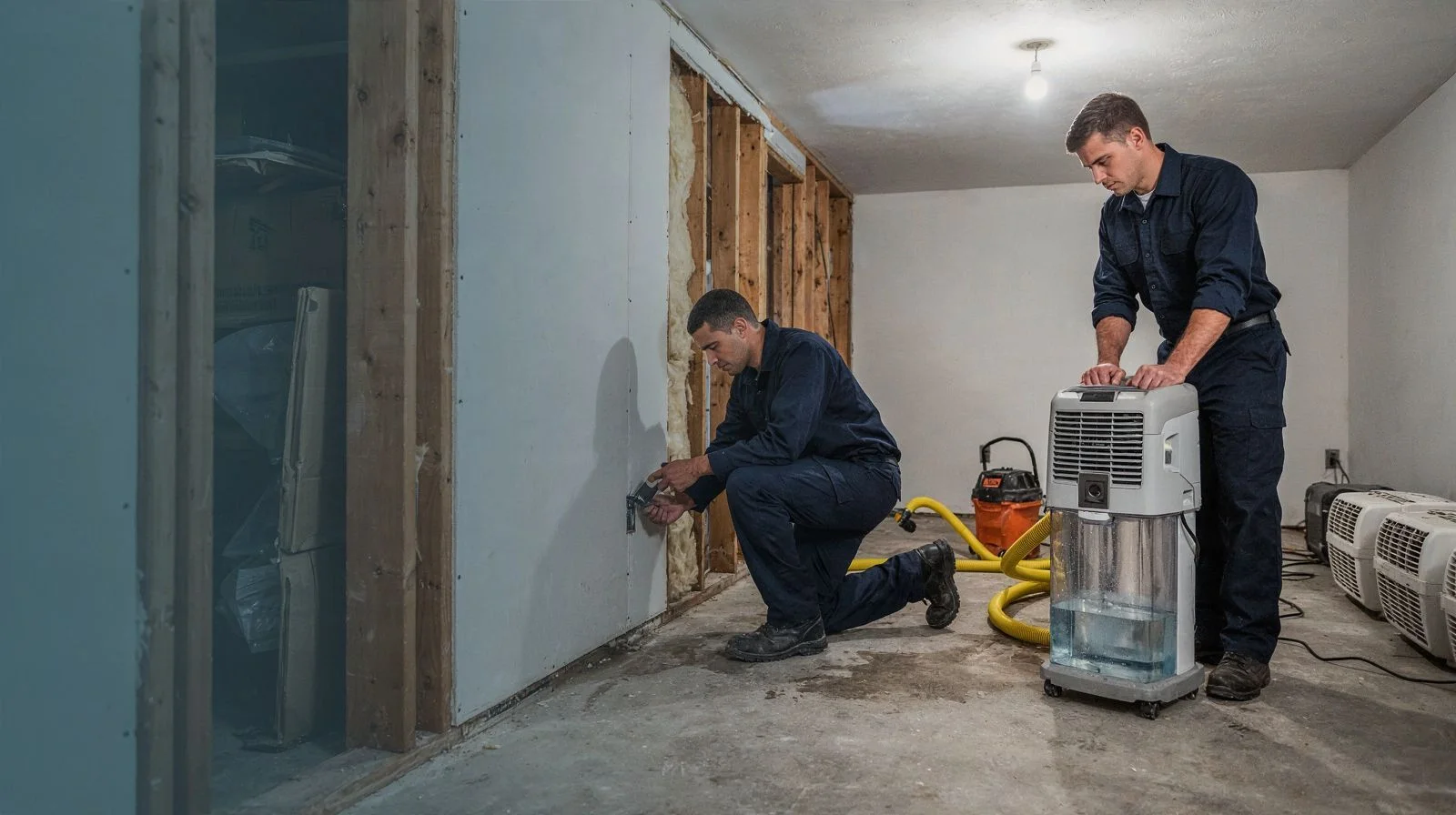
Pros start with safety and source control... verifying water shutoff when needed and checking electrical exposure. Next comes a moisture inspection using meters and thermal imaging to map wet areas in walls, floors, and cabinets. They document conditions with photos, explain the drying plan, and protect walk paths with floor covering before equipment is brought in. If materials are saturated and non‑salvageable, targeted removal focuses on the minimum necessary to open cavities and speed drying.
Drying plans that fit Florida construction
Clearwater homes often combine concrete block exteriors with interior drywall, tall baseboards, and tile over slab. Drying that assembly means controlling dew point, moving air where it helps, and removing air where it doesn’t. Technicians may use wall cavity drying, baseboard removal, or floating techniques only when appropriate, always checking for hidden moisture at door casings, under toe‑kicks, and along sliding doors that see wind‑driven rain. Wood features... like vanities, base cabinets, and trim - are monitored closely to limit swelling and finish damage.
Mold remediation when humidity lingers
If microbial growth is present or likely, matched pros set containment, run HEPA air filtration, remove affected porous materials as needed, and clean remaining surfaces with industry‑standard methods. They verify dry standards before rebuilding so problems don’t reappear. Guidance aligns with established best practices for homes and condos near salt air and high humidity EPA mold cleanup.
Condo water damage restoration, handled respectfully
Clearwater Beach and nearby high‑rise communities require careful logistics. Crews coordinate elevator pads, staging areas, and quiet‑hour rules with building staff. Negative‑pressure containment helps control dust and odors, and hallway protection keeps shared areas clean. Documentation packets with photos and moisture readings help property managers and insurers understand the work completed.
Protecting finishes and contents
Matched contractors prioritize what can be saved. Rugs and light furniture may be moved to dry zones. Cabinets are tested at backs and floors to decide between drying in place or surgical removal. For engineered wood and luxury vinyl, pros verify underlayment moisture before reinstalling trim. Odor control focuses on drying the source, then applying appropriate treatments once readings confirm progress.
Clear updates and insurance coordination
You receive daily summaries of moisture readings, areas drying successfully, and any adjustments to the plan. If you’re filing an insurance claim, the documentation; photos, diagrams, and equipment logs; helps your adjuster see scope clearly. Pricing depends on the job and materials impacted; for an overview, see water damage restoration costs in Clearwater.
Reaching Clearwater efficiently
For addresses near US 19, routing via FL‑580 keeps crews out of beach traffic while still arriving with the right mix of extraction tools, dehumidifiers, and air movers. For homes around Coachman Park, crossing the Courtney Campbell toward SR‑60 places teams close to downtown streets and the Memorial Causeway. For Clearwater Beach, technicians plan for parking restrictions and use carts and protective runners to move equipment without impacting common areas.
Finishing well
When materials meet dry goals, containment comes down, equipment is removed, and spaces are cleaned for the next phase. If repairs are needed, your contractor outlines the scope and coordinates with you and, where relevant, your HOA. The goal is a clean handoff - from mitigation and mold remediation to rebuild... so your home or condo is ready for the finish work it deserves.
Our Services in Clearwater, FL
Clearwater, FL water damage restoration pricing from independent local contractors matches the rest of the Tampa, FL area: $1,200 - $7,500. See Clearwater, FL water damage restoration pricing.
Why Clearwater, FL Chooses Tampa Water Damage Restoration
Local insight, coastal climate
Plans account for Gulf weather, salt air, and wind‑driven rain patterns common in Clearwater, FL.
Condo‑savvy coordination
Pros work within elevator, parking, and quiet‑hour rules so shared areas stay clean and neighbors stay informed.
Moisture mapping that finds the hidden
Thermal imaging and pin readings check behind baseboards, under cabinets, and around sliders where water hides.
Respect for finishes
Careful protection and targeted removal help save tile, trim, and cabinetry whenever it’s realistic to do so.
Clear documentation
Daily readings, photos, and simple summaries help you and your insurer track progress without confusion.
Flexible scheduling
Open 9 AM–9 PM, with updates timed to your day and coordination that fits HOA or building guidelines.
Water Damage Restoration FAQs in Clearwater, FL
How do crews plan water damage restoration in Clearwater, FL condos near Clearwater Beach where access is tight?
They coordinate with building staff for elevator padding, staging, and parking, then bring containment and HEPA filtration to control dust and odors. Work is sequenced to respect quiet hours and keep corridors clean while drying units thoroughly.
What steps are common for water damage restoration in Clearwater, FL concrete block homes after wind‑driven rain?
Technicians check window corners, door thresholds, and stucco transitions where water often enters. The plan focuses on cavity drying along baseboards, targeted drywall removal if needed, and dehumidification sized for tile‑over‑slab interiors.
During water damage restoration in Clearwater, FL, how do pros handle high humidity near Coachman Park and the waterfront?
Dehumidifiers are right‑sized to the moisture load, and containment reduces the treated volume so drying is more efficient. Readings are tracked daily to confirm grains‑per‑pound are falling and materials are reaching target levels.
Which route do technicians often use from 6203 Johns Rd, #7, Tampa, FL 33634 to start water damage restoration in Clearwater, FL promptly?
They commonly take FL‑589 to SR‑60 across the Courtney Campbell Causeway for downtown and beach access, or go via FL‑580 toward the US 19 corridor for north and east Clearwater neighborhoods, depending on traffic and your exact address.
How do pros locate and dry moisture beneath tile in Clearwater, FL homes built on slab?
They test grout lines and baseboards, use infrared and non‑invasive meters, and may remove select tiles or base to open wet cavities. Drying can include directed air, heat, and dehumidification to reach adhesive layers without damaging sound tile.
Do Clearwater, FL homes on canals in Island Estates need special steps during water damage restoration?
Canal exposure raises humidity and breeze‑driven rain, so containment and larger dehumidifiers are common. Crews also watch for salt‑air corrosion at fasteners and sliders, documenting conditions so repairs address both moisture and long‑term durability.
Contact Us Today for a Free Estimate
Stop further damage and dry your space faster.
Schedule your water damage restoration service today.
Free — no obligations