Tampa, FL water & mold restoration for homes + condos
Water Damage Restoration in Spring Hill, FL
Local help for leaks, floods, and mold in Spring Hill. Scheduling is available during regular hours.
Water damage help for Spring Hill homes
When you need water damage restoration in Spring Hill, FL, Tampa Water Damage Restoration connects homeowners in Spring Hill, FL with local water damage restoration pros.
From supply-line leaks to storm-driven roof drips, matched contractors bring moisture detection, structural drying, and cleanup tailored to Florida’s slab-on-grade homes and concrete block walls. Our office in Tampa, FL keeps 9 AM–9 PM hours daily; for coverage and scheduling questions, reach us at (656) 248-4007.
Services include water damage restoration, mold remediation when growth is suspected or confirmed, and condo water damage restoration coordinated with property rules. The goal is simple: stabilize the loss, dry structures thoroughly, and prepare spaces for a clean, safe rebuild.
Spring Hill, FL homes and moisture
Spring Hill sees long, humid summers and frequent thunderstorms that can push wind-driven rain under roof coverings and around windows. Many homes are slab-on-grade with concrete block and stucco exteriors, tile floors, and dense baseboards - materials that can trap moisture in wall cavities and behind cabinets if not handled correctly. Afternoon downpours, tropical systems, and high groundwater near the Nature Coast increase the risk of intrusion from roof, window, and door assemblies as well as from overwhelmed gutters and exterior grading. Proper drying plans here account for high ambient humidity, tight finishes, and the need to monitor moisture below baseplates and behind tile. Regional rainy-season patterns are well documented by the National Weather Service for the Tampa Bay area NWS rainy season.
Serving Spring Hill, FL with specialized drying
Spring Hill homes face a unique mix of Florida weather and building styles. Matched contractors focus on quick stabilization, targeted demolition when needed, and controlled drying that fits slab-on-grade construction, tile and LVP flooring, and concrete block walls common throughout the community. Whether the issue is a dishwasher supply line, a laundry overflow off Mariner Boulevard, or wind-driven rain along US‑19 (Commercial Way), the process is planned to stop further damage and return materials to dry standards.
What local pros do first
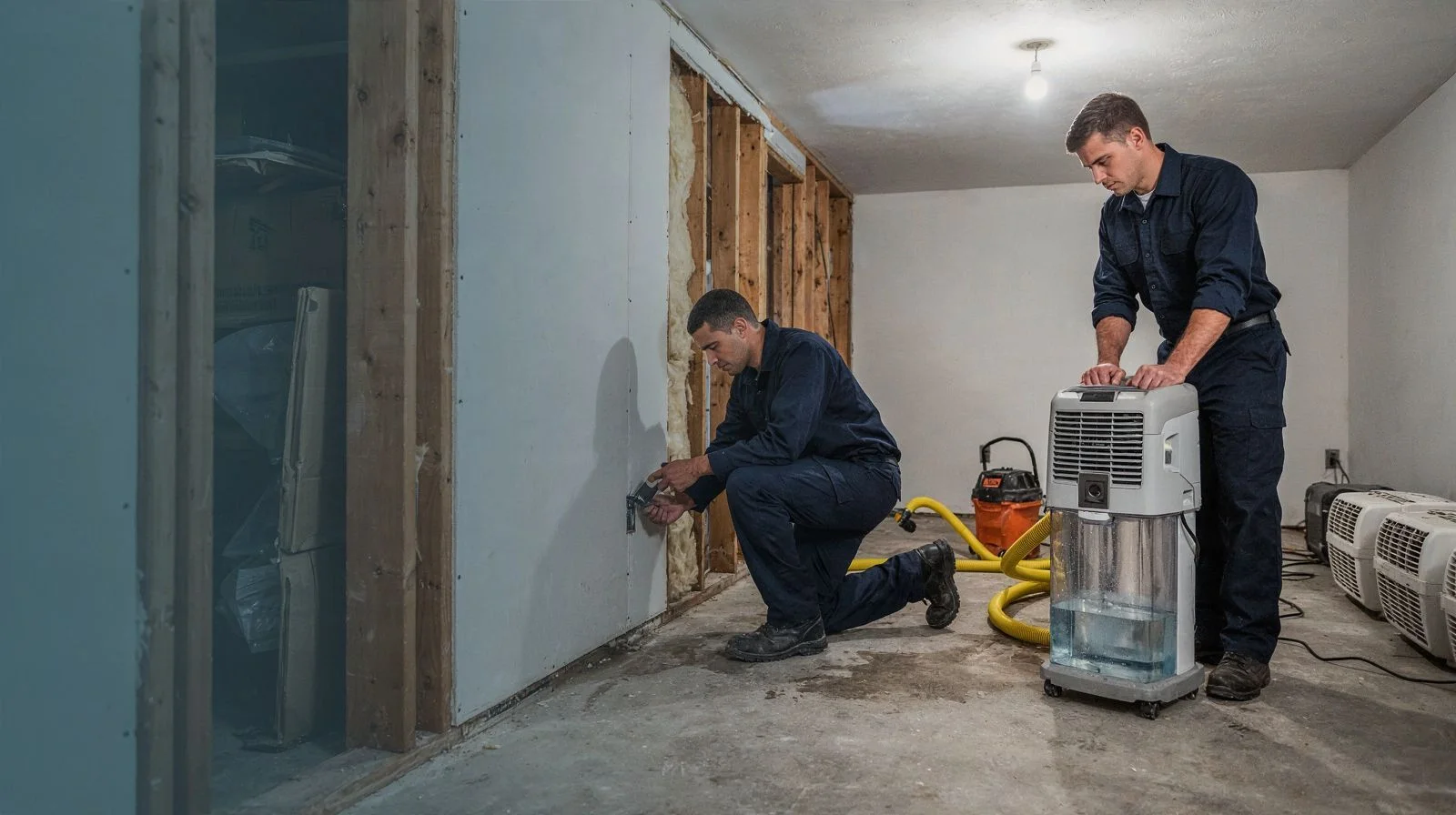
On arrival, technicians assess where water traveled, check for electrical safety, and identify materials that should be removed versus dried in place. Moisture meters and thermal imaging map the wet footprint through drywall, baseboards, and into wall cavities. Standing water is extracted to reduce humidity quickly, then containment and directed airflow are set to move dry air across wet surfaces. Where materials are salvageable, the goal is to dry, not replace; where swelling or delamination prevents recovery, clean cuts and proper disposal prepare the area for rebuilding.
Drying tuned to slab-on-grade homes
Many Spring Hill houses sit on concrete slabs finished with tile or engineered flooring. Crews use negative-pressure drying under cabinets and along baseboards to pull moisture out of wall cavities without opening entire rooms. For tile on slab, dehumidification helps drive moisture out of porous grout lines while monitoring the slab’s readings to avoid trapping humidity. In rooms with built-ins, toe-kicks can be vented and resealed after dry goals are reached. The plan is measured with daily readings so settings adjust as conditions change.
Roof and storm leaks after downpours
Thunderstorms and tropical bands can push rain under lifted shingles, through soffits, or around window frames. In those cases, matched pros isolate the affected ceilings and walls, remove wet insulation where necessary, and establish controlled airflow that won’t spread dust or spores into adjacent rooms. If stained ceilings or sagging drywall appear after a stormy afternoon, the team traces the intrusion path to ensure damp framing and insulation pockets aren’t left behind. Coordinating with a roofer for exterior fixes helps prevent re-wetting during the dryout.
Kitchens, baths, and laundry rooms
Water losses often start at supply lines, ice-maker hoses, or washing machine valves. In Spring Hill’s many tile-finished kitchens and bathrooms, water can slip under cabinets and into wall cavities. Technicians detach and reset toe-kicks for air movement, remove swollen particleboard shelving when required, and protect stone countertops while drying the cabinet boxes. In laundries, pan overflows and hose failures are checked for migration into adjacent rooms so hidden moisture doesn’t linger under baseplates.
Mold remediation when growth is found
If microbial growth is present, matched contractors isolate the work zone, run HEPA air filtration, and remove unsalvageable porous materials following current industry guidance. Non-porous surfaces are cleaned and detailed, and wood framing is dried to target levels before encapsulants are applied. This careful sequence helps keep spores from spreading and prepares spaces for healthy reconstruction once moisture is controlled.
Condo water damage restoration in Spring Hill
Townhome and condo communities off Spring Hill Drive and near Commercial Way often have shared walls and limited parking. Crews coordinate access with property rules, protect common corridors and stairs, and plan drying noise around posted quiet hours. Moisture mapping covers neighboring units when rules require it, and documentation is prepared clearly for boards or property managers so approvals move along without confusion.
Protecting finishes and belongings
Contents that can be saved are moved to dry areas of the home or carefully elevated and protected. Wood furniture is blocked to keep legs off damp floors, area rugs are assessed for color-run risks before drying, and electronics are kept out of high-humidity zones. Where drywall must be removed, clean, straight cuts simplify later repairs and reduce dust. Dust control and light cleaning happen throughout so lived-in spaces stay as usable as possible while equipment runs.
Getting to Spring Hill efficiently
Crews stage from 6203 Johns Rd, #7, Tampa, FL 33634 and typically travel via Veterans Expressway/Suncoast Parkway (FL‑589) north, exiting at Spring Hill Drive or County Line Road to reach neighborhoods across the area. For addresses nearer to the coast, routing may continue to US‑19 (Commercial Way). Alternate paths using US‑41 are available when traffic patterns make them faster. This mix of routes helps teams arrive with the right equipment while avoiding slowdowns on beach corridors.
Serving landmarks and neighborhoods
Coverage includes homes around Anderson Snow Park, communities along Mariner Boulevard, and pockets near Delta Woods Park, as well as streets connecting to Spring Hill Drive and County Line Road. Houses on cul‑de‑sacs and curved streets common to the area often require compact equipment placement and careful cable routing; pros plan layouts that keep driveways and walkways clear where possible. For larger properties, staging is set to maintain safe entry and exit, especially during afternoon storms.
How timeline and cost are determined
Drying time depends on how long water was present, the materials affected, and the weather during the project. Dense finishes like tile and thick baseboards take longer to dry than open framing, and humid weather can extend runtimes. The scope of any needed removal also guides the schedule for rebuild trades. For planning, see typical water damage restoration costs in Spring Hill; final pricing depends on the specific conditions at your address and any repairs the structure requires.
Finishing strong
Once dry goals are confirmed, equipment is removed, surfaces are cleaned, and the area is left ready for repairs or painting. Photos, moisture logs, and notes documenting the loss and response are shared so insurers and contractors know exactly what was done. That way, the next phase starts on solid footing, with clear information for everyone involved.
Our Services in Spring Hill, FL
Typical water damage restoration cost in Spring Hill, FL from independent local contractors (same as elsewhere in the Tampa, FL area): $1,200 - $7,500. See typical water damage restoration costs near Spring Hill, FL.
Why Spring Hill, FL Chooses Tampa Water Damage Restoration
Local know‑how
Pros understand Spring Hill’s slab-on-grade homes, tile finishes, and concrete block walls, tailoring drying to the way houses here are built.
Measured results
Moisture readings and photo logs guide every step, so adjustments are based on data, not guesswork.
Condo‑friendly approach
Teams respect HOA rules, protect shared areas, and plan equipment noise and access around posted time windows.
Efficient routing
Travel from Tampa uses the Suncoast Parkway and other smart routes to arrive prepared with the right mix of equipment.
Clear documentation
Insurers and rebuild trades receive organized reports that outline affected areas, dry goals, and work completed.
Safety first
Electrical checks, antimicrobial handling when needed, and tidy work zones help keep families and pets safe during drying.
Water Damage Restoration FAQs in Spring Hill, FL
How is water damage restoration planned for Spring Hill, FL homes along Mariner Boulevard after an afternoon thunderstorm?
Technicians first locate and stop the source, then map moisture through ceilings, walls, and floors to see how far it spread. Wind-driven rain often wets insulation and baseplates, so plans include targeted removal where needed and controlled drying that keeps humidity in check.
How do pros handle water damage restoration in Spring Hill, FL houses with tile on slab near Anderson Snow Park?
They focus on dehumidification and directed airflow while monitoring slab moisture so humidity doesn’t get trapped under finishes. Baseboards may be loosened or vented to dry wall cavities, and cabinets are protected as under-cabinet spaces are ventilated.
Which route is commonly used to reach Spring Hill, FL for water damage restoration from Tampa?
Crews often take the Veterans Expressway/Suncoast Parkway (FL‑589) north and exit at Spring Hill Drive or County Line Road to reach neighborhoods quickly. For addresses closer to US‑19 (Commercial Way), routing may continue west to serve coastal areas efficiently.
During water damage restoration in Spring Hill, FL, how is high summer humidity managed so drying stays on track?
Dehumidifiers sized to the cubic footage run continuously, and airflow is adjusted to move dry air across wet surfaces. Daily moisture readings guide equipment placement and runtime so materials reach target levels even during muggy stretches.
What steps are typical for mold remediation during water damage restoration in Spring Hill, FL homes?
If growth is confirmed, work areas are isolated, HEPA air filtration runs, and unsalvageable porous materials are removed. Remaining surfaces are cleaned and dried to goals before any sealing or rebuild work begins.
How is condo water damage restoration coordinated in Spring Hill, FL communities off Spring Hill Drive or near US‑19?
Teams schedule access around community rules, protect common corridors, and plan equipment placement to keep walkways open. Moisture checks may extend to neighboring units when required by the property manager or HOA.
Contact Us Today for a Free Estimate
Stop further damage and dry your space faster.
Schedule your water damage restoration service today.
Free — no obligations