Tampa, FL water & mold restoration
Water Damage Restoration in Dunedin, FL
Local pros serve Dunedin homes and condos with careful cleanup, drying, and repairs.
Reliable help for Dunedin homes
For water damage restoration in Dunedin, FL, Tampa Water Damage Restoration connects homeowners in Dunedin, FL with local water damage restoration pros. You get prompt help for leaks, appliance overflows, storm intrusion, and moisture problems, plus mold remediation and condo water damage restoration tailored to coastal buildings.
We’re a Tampa-based lead service that links you with trusted contractors who do the work. From inspection and moisture mapping to drying and repairs, the matched pros focus on protecting finishes, reducing disruption, and documenting everything for insurance.
Our network is coordinated from Tampa, FL, so crews know the usual traffic patterns between Tampa and Pinellas County. You can reach scheduling during posted hours at (656) 248-4007.
Why Dunedin, FL homes need attentive drying
Dunedin’s coastal setting, older block‑on‑slab homes, and frequent summer downpours make quick moisture control essential. Many houses use tile over concrete and stucco on masonry, which hides water behind baseboards and at window perimeters. Condos along the causeway face wind‑driven rain and salt air, while afternoon humidity slows evaporation. Professional dehumidification, targeted wall cavity drying, and careful monitoring help prevent secondary damage and mold growth. Pinellas County also notes flood risk across low‑lying areas, adding urgency after heavy rain or tropical systems Pinellas flood info.
Serving Dunedin from our Tampa base
Tampa Water Damage Restoration connects you with restoration crews familiar with Dunedin, FL neighborhoods, building styles, and coastal weather. Teams depart from our Tampa office at 6203 Johns Rd, #7, Tampa, FL 33634 and typically head northwest using two main corridors to reach homes and condos across Dunedin.
Typical routes we use
During lighter traffic, crews often take FL‑589 (Veterans Expressway) to SR‑580 (Tampa Road) and continue west toward Main Street to reach Downtown Dunedin and streets near the Pinellas Trail. When beach traffic builds, another common path is FL‑60 across the Courtney Campbell Causeway, then north on McMullen Booth Road (CR‑611) to Curlew Road (SR‑586) into the Dunedin Causeway area and neighborhoods east of Bayshore Boulevard. In heavier evening congestion, pros may select US‑19 for access to Curlew or Main Street, then cut west to your address.
What local homeowners can expect
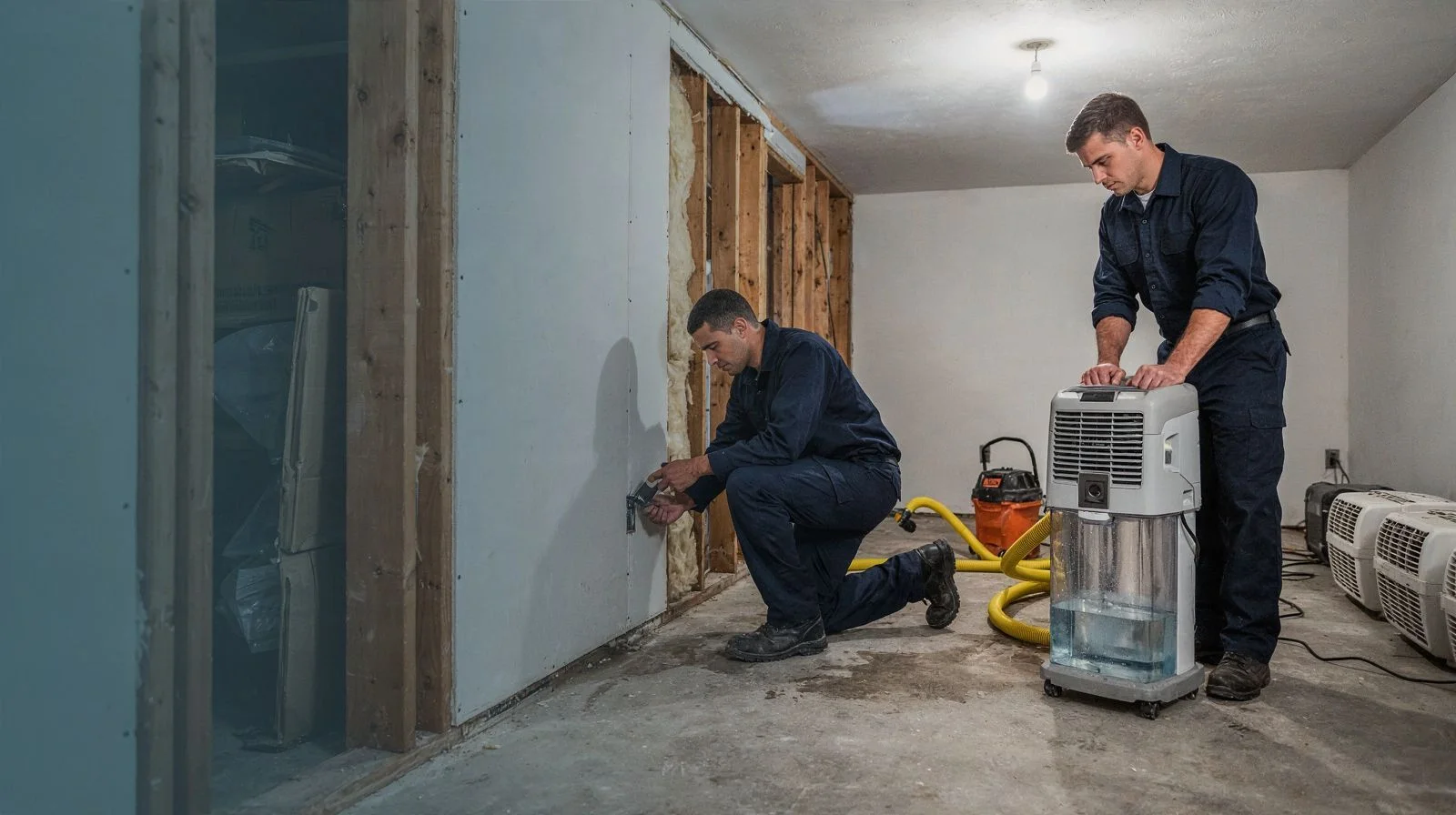
Matched contractors start with moisture checks and a straightforward plan. The first priority is stopping the source, removing standing water, and protecting contents. Next comes controlled demolition only where materials cannot be dried in place - such as delaminated laminate, swollen baseboards, or saturated carpet pad. Equipment is positioned to move dry air across wet surfaces while dehumidifiers pull moisture from the air. Daily measurements guide adjustments until materials return to target levels.
Single‑family homes in Dunedin
Many Dunedin homes are concrete block on slab with tile or engineered flooring. Supply‑line failures, AC condensate clogs, and window leaks after fast storms are common. Pros look closely at wall‑to‑floor joints, toe‑kick spaces beneath cabinets, and door thresholds where water can track under finishes. Expect careful removal of base trim for hidden drying, non‑invasive meter readings on masonry, and protection for nearby rooms so dust and debris stay contained.
Condo work near the water
Crews understand the logistics of mid‑rise and low‑rise condos around the Dunedin Causeway and near Downtown Dunedin. They arrange elevator padding, lay protection along hallways, and coordinate with building rules on parking and quiet hours. Vertical stacks and shared walls get extra moisture checks to ensure neighboring units stay protected. Communication with property management helps keep timelines smooth and common areas clean.
Humidity‑smart drying in coastal air
Dunedin’s marine air can slow evaporation, so pros size dehumidifiers to room volume and moisture load instead of relying on fans alone. HVAC settings are managed to support drying without cooling the space so much that condensation forms. Where safe and practical, targeted wall‑cavity airflow or small desiccant systems help dry dense materials. Daily data - surface temps, relative humidity, and material readings - guides the plan, avoiding both under‑ and over‑drying.
Materials common in Pinellas builds
- Concrete block and stucco: Moisture can linger in the base course; technicians check several inches above the floor and along doorways.
- Tile over slab: Grout lines and transitions are inspected; if water traveled under tile, negative‑pressure drying or selective removal may be needed.
- Wood trim and doors: Swelling around jambs and baseboards is common after wind‑driven rain. Crews remove or vent trim where readings stay elevated.
Neighborhood touchpoints we know
Work often spans streets near Downtown Dunedin, homes around Hammock Park, and properties toward Honeymoon Island State Park. Houses closer to Bayshore Boulevard face more wind‑driven rain, while deeper neighborhoods off Curlew Road may collect runoff during intense downpours. Pros tailor drying layouts to room size and window exposure so living areas can remain as functional as possible during the process.
Mold remediation when moisture lingers
If a wet area sat unnoticed, matched contractors follow containment and filtration practices to control dust and spores. Porous finishes that cannot be cleaned are removed, and remaining materials are cleaned and treated per industry guidance. Final moisture verification confirms the structure is ready for rebuild work. Documentation includes readings, photos, and a simple narrative useful for insurers and HOAs.
Condo water damage restoration details
Condo projects in Dunedin call for clear coordination. Crews schedule access with management, protect elevators and hallways, and stage equipment so paths stay open. If water traveled to a lower unit, teams communicate findings with management so the affected areas can be inspected and addressed promptly. Noise is planned within posted building hours, and negative‑pressure setups can help limit sound and odor travel.
Protecting finishes and contents
Technicians move or cover furniture, lift certain items on blocks, and create clean pathways. For built‑ins and cabinets, they evaluate backing materials and toe‑kicks, deciding whether to dry in place or remove selectively. Odor control focuses on source removal and balanced airflow rather than heavy fragrances. The goal is to return the home to normal moisture readings with minimal disruption.
Travel timing and scheduling
Travel time from 6203 Johns Rd, #7, Tampa, FL 33634 to Dunedin varies with weather and season. Crews select Veterans Expressway to Tampa Road for direct access to Main Street, or Courtney Campbell Causeway to McMullen Booth and Curlew to reach the causeway and neighborhoods north of Main. During weekend beach traffic, teams plan earlier departures and use alternate entries from US‑19 to stay reliable.
Insurance and communication
Matched pros keep simple records - moisture logs, photos, and a floor sketch... so insurance adjusters can follow the work. Homeowners receive plain‑English updates about what’s dry, what still needs time, and the next step. If rebuild is required after drying, contractors outline options and timing based on materials and availability.
Pricing transparency
Every project is different because building materials, room sizes, and how long water was present all change the scope. Your contractor will explain the plan and provide an estimate that reflects the actual work. For general budgeting insight, see water damage restoration costs in Dunedin.
After the dry‑out
When targets are met, equipment is removed and the area is prepped for any necessary repairs; patching drywall, reinstalling trim, or resetting cabinetry where appropriate. Final checks confirm humidity is stable and materials are back to normal. The result is a dry, clean space that’s ready for life on the coast again.
Our Services in Dunedin, FL
Typical water damage restoration cost in Dunedin, FL from independent local contractors (same as elsewhere in the Tampa, FL area): $1,200 - $7,500. See typical water damage restoration costs near Dunedin, FL.
Why Dunedin, FL Chooses Tampa Water Damage Restoration
Local Pinellas know‑how
Crews understand Dunedin’s coastal weather, older block homes, and condo rules, so plans fit real site conditions.
Care for condos and HOAs
Elevator pads, hallway protection, and clear coordination help keep shared areas clean and neighbors comfortable.
Moisture data that guides work
Readings and photos support decisions, helping avoid unnecessary demolition while ensuring a complete dry‑out.
Respect for your space
Clean pathways, dust control, and organized equipment placement reduce disruption during restoration.
Straightforward pricing
Estimates explain scope and materials. Final documentation supports insurance without confusing jargon.
Water Damage Restoration FAQs in Dunedin, FL
From in Tampa, FL, which route do crews typically use to reach Dunedin, FL during evening traffic?
Pros often choose FL‑589 to SR‑580 for direct access to Main Street when traffic flows well. If Courtney Campbell Causeway is moving, they may use FL‑60 to McMullen Booth Road and turn west on Curlew Road to reach the Dunedin Causeway side. On high‑traffic days, US‑19 provides alternate north–south access before cutting west.
How do pros approach water damage restoration in Dunedin, FL homes near the Pinellas Trail where lots are narrow and homes sit close together?
Crews plan compact equipment layouts to keep walkways clear and reduce noise near neighbors. They focus on targeted airflow and dehumidification inside the affected rooms while sealing doorways to limit dust and odor travel outdoors.
What’s different about water damage restoration for Dunedin, FL cottages along Bayshore Boulevard where wind‑driven rain and salt spray are common?
Technicians check window perimeters, door thresholds, and stucco‑to‑sill joints for hidden moisture. Salt air can corrode fasteners, so materials with early deterioration may be removed instead of dried. Extra attention is paid to humidity control because coastal air slows evaporation.
For condo water damage restoration on the Dunedin Causeway, FL, how are access and shared spaces handled?
Teams schedule work within building hours, pad elevators, and protect corridors with runners. Moisture checks extend to adjoining walls and ceilings to confirm water did not travel to neighboring units. Equipment is staged to keep exits open and minimize impact on residents.
In Dunedin, FL’s midsummer humidity, how do crews reach drying goals during water damage restoration?
They pair controlled airflow with properly sized dehumidifiers and use HVAC settings that support steady evaporation. Materials are checked daily, and drying methods are adjusted when outdoor air is too damp to help.
What problems most often lead to water damage restoration in Dunedin, FL slab‑on‑grade bungalows?
Common issues include supply‑line breaks, AC condensate overflows, dishwasher or washing machine leaks, and wind‑driven rain at doors and windows. Crews also check for water tracking under tile or along baseboards on concrete slabs, which can be easy to miss without meters.
Contact Us Today for a Free Estimate
Stop further damage and dry your space faster.
Schedule your water damage restoration service today.
Free — no obligations